Birthday management shouldn’t be complicated. Yet most people struggle to remember important dates, missing opportunities to celebrate loved ones and maintain relationships. A minimal calendar design focused specifically on birthday tracking solves this problem elegantly. By stripping away unnecessary complexity and creating a streamlined interface centered on annual celebrations, you can effortlessly manage birthdays while ensuring no important date slips through the cracks.
Why Birthday Reminders Matter (And Why Most Systems Fail)
Forgetting birthdays damages relationships. A forgotten birthday signals that someone doesn’t matter to you—even when that’s not true. Yet traditional calendar systems make birthday management surprisingly difficult:
- Calendar Clutter: Birthdays compete for attention with meetings, deadlines, and tasks. Important dates get buried in event noise
- Scattered Information: Birthdays exist in multiple places—social media, contacts, family spreadsheets, old notebooks—making centralized tracking impossible
- Notification Overload: Standard calendar reminders generate so many notifications that birthday alerts blur into background noise
- No Planning Time: Reminders arrive on the birthday itself, leaving no time to purchase gifts, plan celebrations, or write thoughtful messages
- Relationship Loss: Digital contacts change phones, people move, and relationships evolve—tracking becomes fragmented and incomplete
A minimal birthday calendar design addresses these problems by creating a dedicated system optimized exclusively for birthday tracking and celebration planning.
Core Principles of Minimal Calendar Design for Birthdays
Principle 1: Single-Purpose Focus
The best birthday calendar does one thing exceptionally well: track birthdays and provide timely reminders. This single focus eliminates the cognitive load of navigating complex multi-purpose calendars. Every design element serves birthday management—nothing more.
Principle 2: Visual Clarity
A minimal design emphasizes visual hierarchy. Birthdays should be immediately visible without scrolling or clicking through multiple screens. Color-coding, simple typography, and whitespace create instant understanding of upcoming celebrations.
Principle 3: Advance Notice
Minimal birthday calendars provide notifications weeks in advance—not on the birthday itself. Advanced notice enables thoughtful gift selection, party planning, and meaningful celebration preparation.
Principle 4: Relationship Context
Beyond dates, minimal designs preserve relationship context. Noting “Mom’s 65th” provides emotional resonance and celebration ideas that “Birthday: 11/27” never will.
Principle 5: Accessibility and Simplicity
No authentication complexity, confusing menus, or steep learning curves. A minimal birthday calendar works instantly for anyone—grandparents and children alike.
Building Your Minimal Birthday Calendar: Core Features
Annual Month View
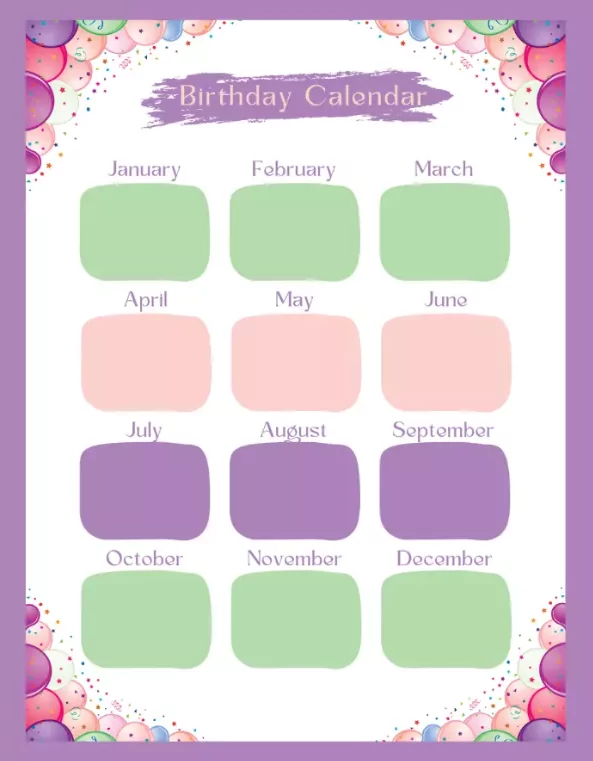
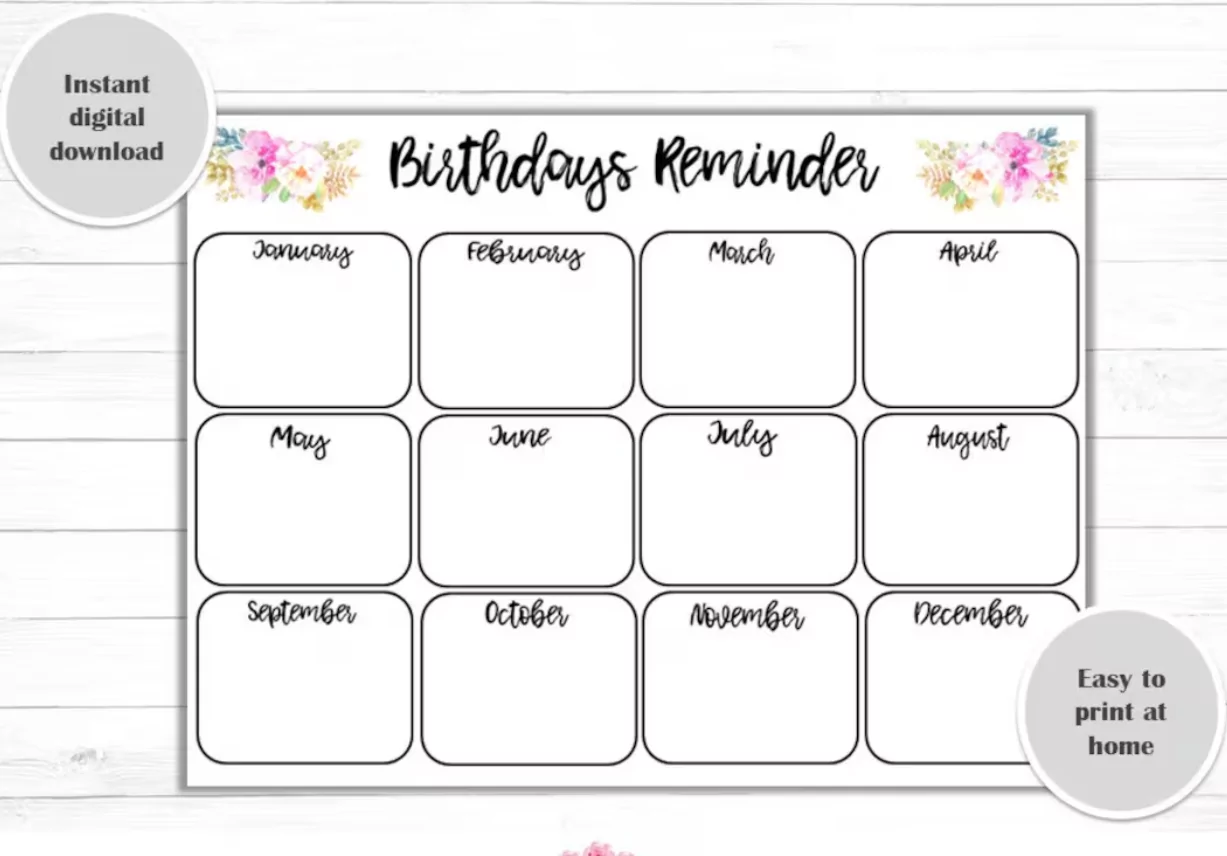
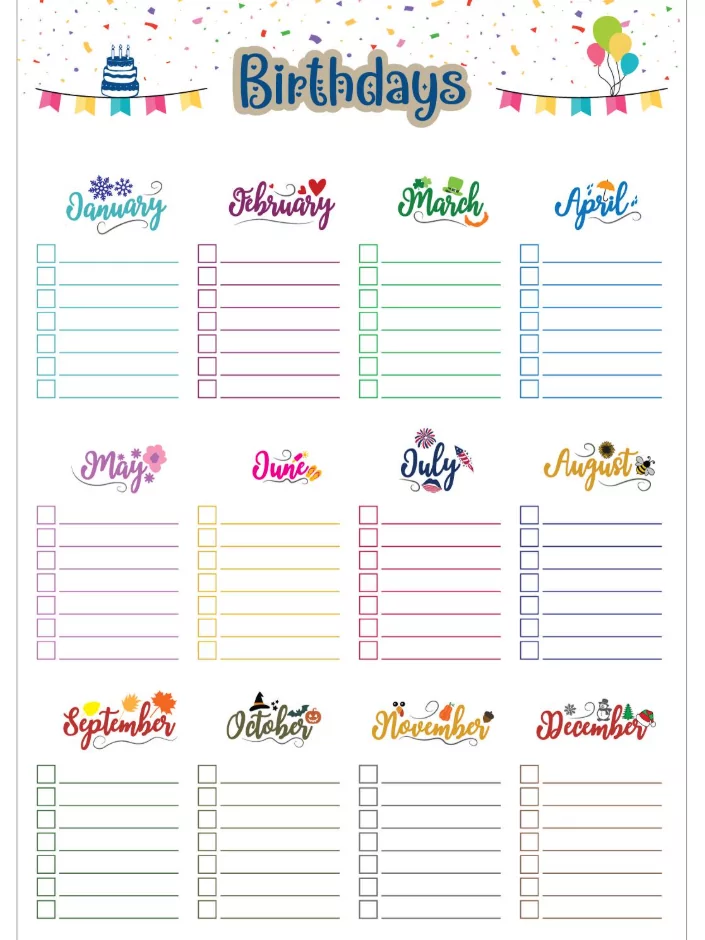
Display all twelve months at once or as simple swipeable cards. Each month shows birthdays for that period with names, dates, and relationship labels. For example:
- January: Dad (1/12), Aunt Sarah (1/28)
- February: Partner (2/4), Best friend Michael (2/19)
- March: Mom (3/3), Cousin Jake (3/15)
This overview provides immediate visibility into upcoming months, enabling batch planning. “March is busy—three birthdays to prepare for” becomes obvious at a glance.
Upcoming 30-Day Window
Display the next 30 days of birthdays prominently. This rolling window ensures current and near-future birthdays receive maximum attention. Design shows:
- Days until birthday (countdown: “15 days”)
- Person’s name and relationship
- Age they’re turning
- Personal notes (favorite gifts, interests, celebrations preferences)
Quick Add Function
Enable rapid birthday entry with minimal friction. Ideally one-tap or one-click: name, date, relationship. More advanced optional fields (age, interests, gift ideas) shouldn’t block entry.
Notification Strategy
Minimal birthday calendars provide multiple strategic notifications:
- 4-Week Notice: “Sarah’s birthday is in 4 weeks—time to start thinking about gifts”
- 1-Week Notice: “Sarah’s birthday is next week—order gifts now for delivery”
- 3-Day Notice: “Sarah’s birthday in 3 days—last chance for same-day shipping”
- Day-Before Reminder: “Sarah’s birthday tomorrow—send a message tonight”
These staggered reminders balance proactive planning with timely action without creating notification fatigue.
Personal Notes Section
Include space for meaningful information beyond the date:
- Relationship (Mom, Best friend, Colleague, etc.)
- Gift preferences and interests
- Celebration traditions or preferences
- Contact information for coordination
- Past gift history (avoiding duplicates)
- Milestone birthdays (30th, 40th, 50th) deserving special attention
Design Elements for Minimal Birthday Calendars
Color Coding
Use color strategically to categorize relationships at a glance:
- Red: Immediate family (parents, siblings, spouse)
- Blue: Extended family (grandparents, cousins, aunts/uncles)
- Green: Close friends
- Gold: Milestone birthdays (30th, 50th, etc.)
- Gray: Colleagues or acquaintances
This visual categorization enables instant recognition of relationship priority and celebration importance.
Typography
Minimal design emphasizes readable typography:
- Large, clear font sizes for names and dates
- Generous line spacing reducing visual density
- Bold text for upcoming birthdays, lighter for distant dates
- Consistent hierarchy distinguishing names, dates, and relationships
Whitespace
Abundant whitespace prevents visual overwhelm. Each birthday entry has breathing room, creating calm interface navigation despite information density.
Icons and Visual Indicators
Minimal icons communicate meaning instantly:
- 🎂 Cake icon for regular birthdays
- 🎉 Party icon for milestone birthdays
- 📌 Pin icon for VIP birthdays
- ✓ Checkmark for contacted/gifted
- 🔔 Bell icon for notification settings
These visual indicators work across cultures and languages, creating universal understanding.
Practical Implementation: Tools for Minimal Birthday Calendars
Simple Spreadsheet System
A Google Sheet creates a minimal but powerful birthday system. Columns include: Name, Birthdate, Age, Relationship, Notes, Gift Ideas, Contact Info. Format with conditional formatting to highlight upcoming birthdays automatically.
Add a formula calculating “Days Until Birthday” that automatically updates daily. Sort by this column to show upcoming birthdays first.
Dedicated Birthday Apps
Several apps focus exclusively on birthday management:
- Birthday Calendar: Syncs with phone contacts, displays upcoming birthdays with customizable reminders
- Happify: Minimal design specifically for birthday and anniversary tracking with greeting card suggestions
- On This Day: Tracks multiple types of anniversaries and milestones with elegant interface
- Remember: Ultra-minimalist design focused purely on dates and notifications
Contact Integration
Leverage existing contact systems by ensuring birthday information syncs across platforms:
- Add birthdays to phone contacts; iOS and Android calendars automatically sync these dates
- Facebook birthday calendar pulls celebrations from social connections
- Gmail contacts with birthday fields automatically add to Google Calendar
- Outlook maintains birthday calendar synced across devices
This integration approach eliminates duplicate data entry while keeping birthday information current.
Calendar Print-Out System
For those preferring analog, create a simple printed birthday calendar displayed prominently at home:
- Monthly layout showing all birthdays for that month
- Color-coded by relationship
- Blank space for notes about gifts or celebrations
- Update annually as needed
Visible wall calendars serve as constant reminders and conversation starters, helping family members anticipate celebrations together.
Advanced Minimal Birthday Calendar Features
Countdown Timers
Display exact countdown to upcoming birthdays: “43 days, 12 hours until Sarah’s birthday.” This countdown creates anticipatory excitement and concrete awareness of planning deadlines.
Age Calculation
Automatically display the age being celebrated: “Sarah turning 30” adds emotional resonance compared to just “Sarah 11/28.” Milestone ages (ending in 0 or 5) can receive special visual emphasis.
Gift Tracking
Add fields tracking gift purchase progress:
- Gift idea generated (brainstorm stage)
- Gift purchased (and what)
- Gift sent/delivered
- Thank-you received
This workflow prevents gift duplication, tracks follow-up needs, and ensures gratitude acknowledgment.
Celebration Notes
After birthdays pass, record what you did: gifts given, celebration held, messages sent. This history prevents repeating the same gift and enriches relationship memory.
Multi-Device Synchronization
Cloud sync ensures birthday data stays current across phone, tablet, computer, and shared family devices. Changes made anywhere instantly appear everywhere.
Birthday Calendar Organization Strategies
Categorize by Relationship Priority
Group birthdays hierarchically:
- Tier 1 – Immediate: Spouse, children, parents (require meaningful gifts and personal attention)
- Tier 2 – Important: Siblings, close friends, grandparents (require gifts and personal messages)
- Tier 3 – Maintain: Extended family, work friends (require acknowledgment—cards or messages)
- Tier 4 – Social: Acquaintances, colleagues (Facebook birthday acknowledgments sufficient)
This categorization clarifies celebration investment appropriate for each person, preventing overwhelm and enabling resource allocation.
Budget Planning by Month
Identify which months contain most birthdays and plan spending accordingly. If March has five birthdays, budget accordingly to avoid financial strain. Advance planning enables thoughtful gifts within realistic budgets.
Batch Preparation
When a month contains multiple birthdays, batch gift shopping, card writing, and celebration planning. This concentrated effort proves more efficient than scattered last-minute scrambling.
Milestone Year Tracking
Flag milestone birthdays (18th, 21st, 30th, 40th, 50th, 60th+) for special recognition. These years often warrant extraordinary celebrations—advanced notice enables meaningful planning.
Digital vs. Analog: Choosing Your Minimal System
Digital Advantages
- Automatic reminders prevent forgotten dates
- Syncs across devices and platforms
- Stores detailed notes and gift history
- Searchable and always accessible
- Updates automatically (no re-entering)
Analog Advantages
- Visible reminder on display (encourages proactive planning)
- Family-wide awareness (everyone sees upcoming birthdays)
- No technology required or failures
- Personal, handwritten quality creates meaning
- Decorative home element
The best approach often combines both: digital tracking for reminders and history, plus an analog calendar displayed prominently at home for family awareness.
Creating a Minimal Birthday Calendar with Loved Ones
Family Collaboration
For families, shared birthday calendars enable collective celebration planning:
- Shared Google Calendar where all family members add birthdays
- Group messaging when someone’s birthday approaches, coordinating gifts
- Shared spreadsheet noting gift ideas from the birthday person’s preferences
Collaboration prevents duplicate gifts, ensures thorough celebration, and strengthens family bonds through coordinated appreciation.
Cultural and Religious Considerations
Include not just birthdays but other important celebrations:
- Name days (celebrated in many cultures)
- Anniversary dates
- Religious or cultural holidays (Christmas, Diwali, Eid, etc.)
- Important life milestones
This expanded system honors diverse celebration traditions and ensures meaningful recognition across cultural contexts.
Minimal Calendar Design Best Practices
Avoid Feature Bloat
Resist adding features beyond birthday tracking. Social media integration, gift delivery services, and complicated workflows undermine minimalism. The goal is simplicity and focus.
Ensure Data Portability
Maintain birthday data in a format you can backup and transfer. Avoid systems where your data is locked in proprietary formats. CSV exports and simple databases ensure long-term data accessibility.
Prioritize Privacy
Birthday information is sensitive. Choose systems with strong privacy protections. Avoid unnecessary data sharing or advertising based on birthday information.
Test Reminder Effectiveness
Verify that reminders actually reach you when intended. Test with an upcoming birthday: do you receive notifications? Can you act on them? Adjust timing and notification methods based on real-world testing.
Beyond Birthdays: Extending Minimal Calendar Design
Once you’ve mastered minimal birthday calendar design, extend the approach to other important dates:
- Anniversaries: Wedding dates, relationship milestones, friendship anniversaries
- Holidays: Cultural celebrations, religious observances important to your community
- Important Events: Graduations, retirements, life transitions to acknowledge
- Pet Birthdays: Don’t forget furry family members
Applying minimal design principles to multiple celebration types creates a comprehensive but elegant recognition system.
Conclusion: Making Birthdays Memorable Through Design
Minimal birthday calendar design proves that sophisticated systems aren’t required for effective celebration tracking. Stripping away unnecessary complexity, focusing exclusively on birthday management, and providing timely reminders creates a system anyone can use effortlessly.
Whether implemented through a simple spreadsheet, dedicated app, or analog wall calendar, a minimal birthday system transforms forgetting birthdays from a regular frustration into a solved problem. More importantly, it enables you to celebrate loved ones consistently and meaningfully—strengthening relationships one remembered birthday at a time.
Start simple: gather all known birthdays in one place (spreadsheet or app). Set up notifications. Test the system with an upcoming birthday. Then maintain the habit through weekly or monthly review. Within months, your minimal birthday calendar becomes an invisible but essential system ensuring no important celebration slips through the cracks again.
