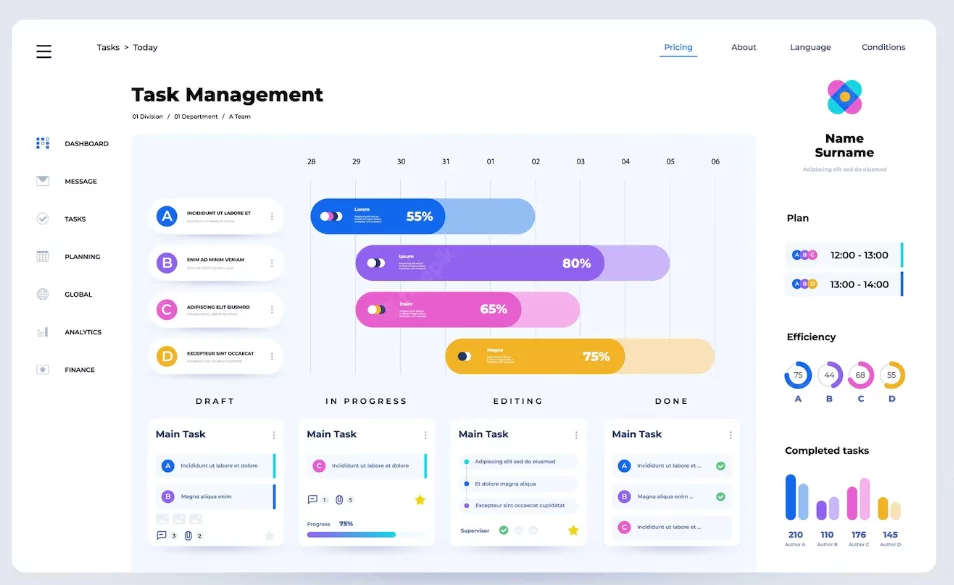
A productivity calendar transforms goal setting from abstract aspiration into concrete daily action through strategic integration of objectives with time management. By connecting long-term goals to daily to-do lists within a calendar framework, individuals create accountability systems that drive consistent progress toward meaningful outcomes. This guide explores how to leverage productivity calendars for effective goal setting and daily task management in 2025.
Why Productivity Calendars Matter for Goal Achievement
- Visibility: Seeing goals and daily tasks together provides context for daily decisions.
- Accountability: Calendar-based tracking creates visual records of progress and effort.
- Progress measurement: Daily to-dos tracked against goals reveal progress velocity.
- Motivation: Watching tasks accumulate toward goals sustains engagement and momentum.
- Adaptability: Calendar views enable quick adjustments when progress lags or circumstances change.
Understanding the Goal-to-Daily-Task Hierarchy
Level 1: Annual Goals (Big Picture)
Define 3-5 major goals for the entire year. Examples include: “Launch side business,” “Run a 5K,” “Read 24 books,” “Save $5,000.” These overarching goals provide direction for quarterly and monthly planning.
Level 2: Quarterly Goals (Strategic Focus)
Break annual goals into quarterly milestones. Quarterly goals create manageable 12-week sprints with specific deliverables. Example: “Save $1,250” breaks down the annual $5,000 savings goal into quarterly targets.
Level 3: Monthly Goals (Tactical Planning)
Monthly goals represent concrete outcomes for specific months. These translate quarterly progress into measurable achievements. Example: “Complete side business planning, register business name, open business bank account” breaks quarterly progress into monthly tasks.
Level 4: Weekly Goals (Action Steps)
Weekly goals outline key focus areas and milestones for 7-day periods. They bridge monthly goals and daily tasks. Example: “Complete business plan draft, research business registration requirements.”
Level 5: Daily To-Dos (Tactical Execution)
Daily to-dos represent specific, actionable tasks completing within a day. They should directly support weekly goals and ultimately contribute to larger objectives.
Setting Up Your Productivity Calendar
Step 1: Define Your Annual Goals
- Choose 3-5 significant goals aligned with your values
- Write goals as specific, measurable outcomes
- Estimate completion timeline (months needed)
- Enter goal titles on your calendar’s annual view
Goal Characteristics
- Specific: “Run a 5K” rather than “get fit”
- Measurable: Include numbers or completion criteria
- Achievable: Realistic within year timeframe
- Relevant: Aligned with personal values
- Time-bound: Target completion month identified
Step 2: Create Quarterly Milestones
- Divide annual goals into four quarterly segments
- Identify key milestones for each quarter
- Calendar entries mark quarterly review dates
- Set measurable outcomes for each quarter
Step 3: Plan Monthly Objectives
- At month’s start, identify 2-3 key monthly objectives
- Link objectives directly to quarterly milestones
- Break objectives into 2-4 major deliverables
- Calendar entries show major milestone dates within month
Step 4: Establish Weekly Themes
- Each week focuses on progressing toward monthly objectives
- Identify 3-5 weekly focus areas
- Calendar displays weekly themes prominently
- Weekly review sessions assess progress
Step 5: Create Daily To-Do Lists
- Each morning, identify 3-5 key daily tasks
- Link tasks explicitly to weekly goals
- Prioritize tasks by importance and urgency
- Calendar shows completed tasks for satisfaction visualization
Color-Coding Goals in Your Productivity Calendar
| Goal Category | Color | Examples |
|---|---|---|
| Career/Business | Blue | Launch side business, earn promotion |
| Health/Fitness | Green | Run 5K, establish exercise habit |
| Learning/Development | Purple | Read 24 books, learn new language |
| Financial | Gold | Save $5,000, eliminate debt |
| Relationships/Personal | Red/Pink | Plan family trip, weekly date nights |
| Creative | Orange | Write novel, create art portfolio |
Daily To-Do Management Within Goal Framework
The “MIT” Method (Most Important Tasks)
Identify 3 Most Important Tasks daily that directly advance weekly goals:
- MIT 1: Primary focus task (40% of daily effort)
- MIT 2: Secondary goal task (30% of daily effort)
- MIT 3: Supporting task (20% of daily effort)
- Additional Tasks: Administrative, maintenance (10% of daily effort)
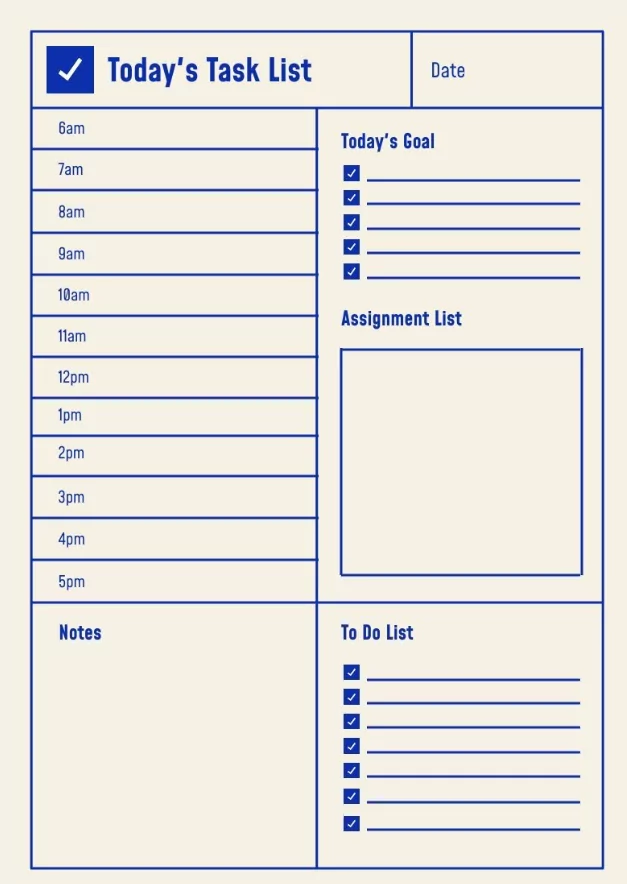
Daily Planning Template
| Component | Detail | Related Goal Level |
|---|---|---|
| Annual Goal Focus | Which annual goal today’s MITs support | Annual |
| Weekly Theme | This week’s focus area | Weekly |
| MIT 1 | Most important task | Quarterly/Monthly |
| MIT 2 | Important supporting task | Monthly/Weekly |
| MIT 3 | Daily maintenance task | Weekly |
| Additional Tasks | Administrative, emails, etc. | Daily |
Using Calendar Tools for Productivity Management
Digital Calendar Platforms
- Google Calendar: Color-code goals, integrate to-do lists, share with accountability partners
- Notion: Custom database combining annual goals, quarterly milestones, monthly plans, weekly themes, daily to-dos
- Asana: Project-based goal management with timeline views and task dependencies
- Todoist: Task management with calendar views and goal-aligned project organization
- Monday.com: Visual project management with goal tracking and daily task integration
Hybrid Approach: Digital + Paper
- Digital calendar for goals, milestones, and scheduling
- Paper bullet journal for daily to-do lists and reflection
- Weekly review sessions connecting paper notes to digital calendar
Weekly Review Process for Goal-Aligned Productivity
Sunday Evening Review (30 minutes)
- Celebrate wins: Review completed tasks from past week
- Assess progress: Compare accomplished tasks to planned goals
- Identify gaps: Note tasks not completed and reasons why
- Plan ahead: Create next week’s MITs aligned with monthly goals
- Adjust calendar: Update timelines if needed; reschedule incomplete tasks
Monthly Review (1-2 hours)
- Assess monthly objective completion percentage
- Calculate progress toward quarterly milestones
- Identify patterns in task completion (what’s working, what’s not)
- Adjust next month’s focus if progress is significantly off-track
- Celebrate monthly progress toward annual goals
Quarterly Review (2-3 hours)
- Comprehensive goal progress assessment
- Quarterly milestone completion analysis
- Annual goal trajectory evaluation (on pace? ahead? behind?)
- Adjust remaining year’s plan if necessary
- Celebrate quarterly achievements and reflect on learning
Strategies for Sustained Daily Task Completion
- Start small: Daily MITs should be achievable 80% of days
- Stack habits: Link MITs to existing daily routines
- Track completion: Visual calendar marking showing completed tasks provides motivation
- Weekly rhythm: Consistent planning days (e.g., Sunday evenings) build habit
- Accountability: Share goals and progress with partner or accountability group
- Flexibility: Allow emergency adjustments without abandoning system
Sample Productivity Calendar: Side Business Launch Goal
Annual Goal: Launch side business by December 31, 2025
Quarterly Milestones:
- Q1: Complete business plan and market research
- Q2: Register business, establish banking, initial website
- Q3: Finalize product/service offering, marketing strategy
- Q4: Soft launch, customer acquisition, refinement
November Monthly Objectives:
- Complete market research (20 hours)
- Write initial business plan outline
- Research competitor offerings (10 hours)
- Define target customer profile
Weekly (Nov 10-16) Theme: Market Research Focus
Daily MITs (Sample Week):
- Monday: Research 5 competitor websites; analyze pricing (MIT 1)
- Tuesday: Interview 3 potential customers about needs (MIT 1)
- Wednesday: Compile market research findings in spreadsheet (MIT 1)
- Thursday: Draft “target customer” profile document (MIT 1)
- Friday: Review week’s research; identify gaps (MIT 1)
Troubleshooting Common Productivity Calendar Issues
- Too many daily tasks: Reduce to 3-5 MITs; move others to next day
- Goals feel overwhelming: Break into smaller quarterly milestones
- Losing motivation: Celebrate weekly wins; adjust goals if unrealistic
- Calendar chaos: Simplify color scheme; focus on fewer goals simultaneously
- Inconsistent tracking: Set consistent weekly review time; make non-negotiable
Conclusion
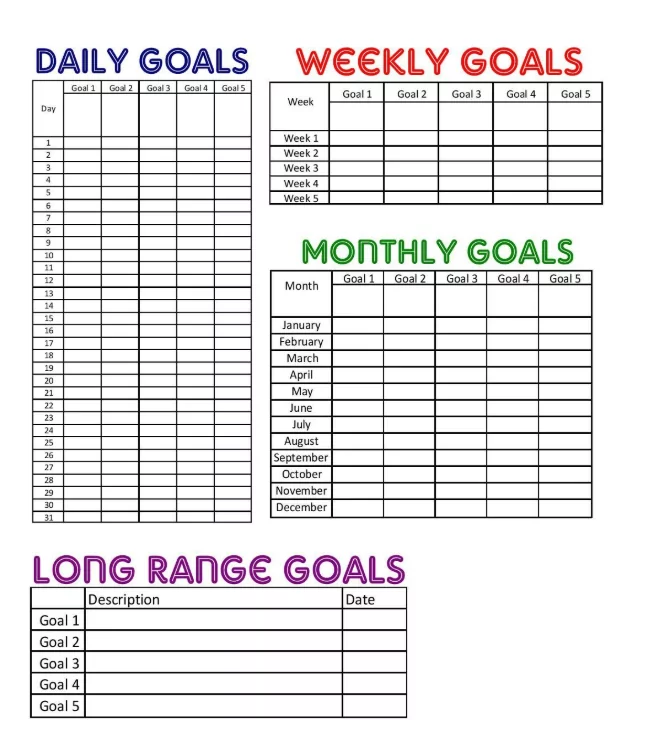
A productivity calendar integrating goal setting with daily to-do management creates a powerful framework for meaningful progress. By connecting annual goals through quarterly milestones, monthly objectives, weekly themes, and daily MIT lists, individuals transform aspirations into consistent action. Regular review cycles (weekly, monthly, quarterly) maintain alignment and enable course correction. Whether launching a business, improving fitness, learning new skills, or pursuing personal growth, this hierarchical goal-to-task structure—visualized through calendar management—delivers superior outcomes compared to isolated goal-setting or task management alone. Implement this system today to achieve more meaningful progress toward your 2025 goals.
